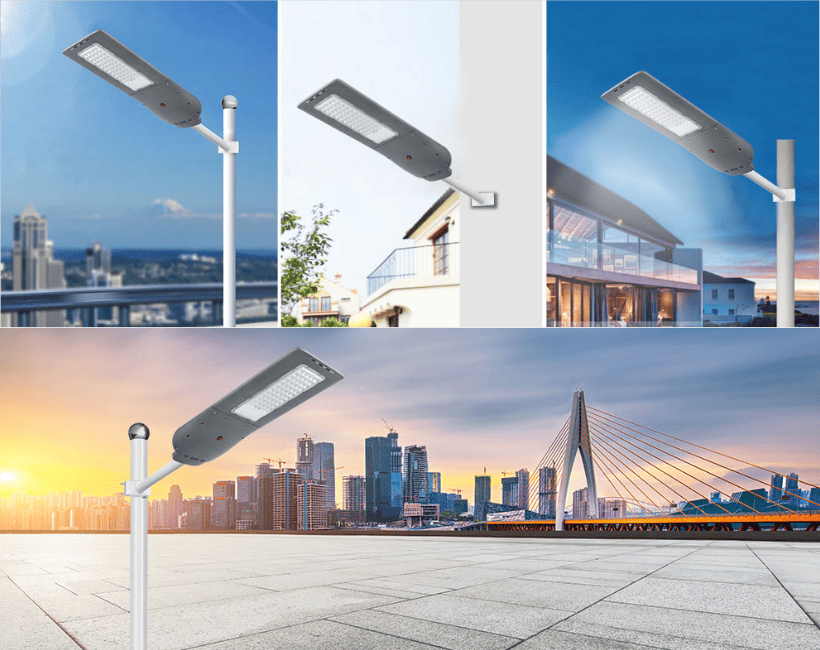
As the global energy structure continues to shift towards a low-carbon and sustainable model, solar lighting is gradually evolving from a "complementary solution" to one of the mainstream infrastructure options. Especially in public roads, municipal projects, industrial parks, and infrastructure construction in emerging markets, integrated solar street lamps, with their advantages of independent power supply, easy installation, and low long-term operation and maintenance costs, are rapidly replacing traditional municipal lighting solutions.
In this context, the all-in-one solar street light, as a highly integrated lighting solution, is becoming an important option in engineering projects and government procurement. Compared to the traditional split system, the all-in-one LED solar street light demonstrates stronger adaptability in terms of design concept, construction efficiency, and overall project controllability. This article will systematically analyze the development direction of the integrated solar street light industry from multiple dimensions such as market environment in 2026, including trends, technology, procurement logic, and future development.
From a macro perspective, the development of the solar street lighting industry is not driven by a single factor, but rather is the result of the combined influence of policies, market demands, and technological maturity. In 2026, these key factors are continuing to shape the overall trend of the global solar lighting market.
Firstly, global energy and environmental protection policies are the most crucial driving force. More and more countries have set carbon neutrality targets, and public lighting systems, as long-term high-energy-consuming facilities, have become the key area for energy-saving renovations. In a large number of municipal and transportation projects, all-in-one solar street lights are favored because they do not require the laying of complex cables and reduce reliance on the power grid. This independent-operating lighting system is particularly suitable for newly developed areas, urban-rural fringe areas, and regions with weak power infrastructure.
Secondly, the changes in users' purchasing logic also profoundly influence market trends. Engineering contractors and project parties no longer merely focus on the initial purchase cost, but place greater emphasis on the total life cycle cost, including installation efficiency, maintenance frequency, and system stability. Compared to traditional solutions, the all-in-one LED solar street light significantly reduces construction complexity and the difficulty of later operation and maintenance by highly integrating solar panels, lithium batteries, LED light sources, and control systems, thereby greatly enhancing the overall controllability of the project.
Furthermore, the continuous increase in labor costs is also an important factor that cannot be ignored. In many areas, the costs of manual installation and line construction have become significant constraints on the progress of projects. The integrated design reduces the installation steps, making the all-in-one solar street light a more suitable choice for current engineering practices.
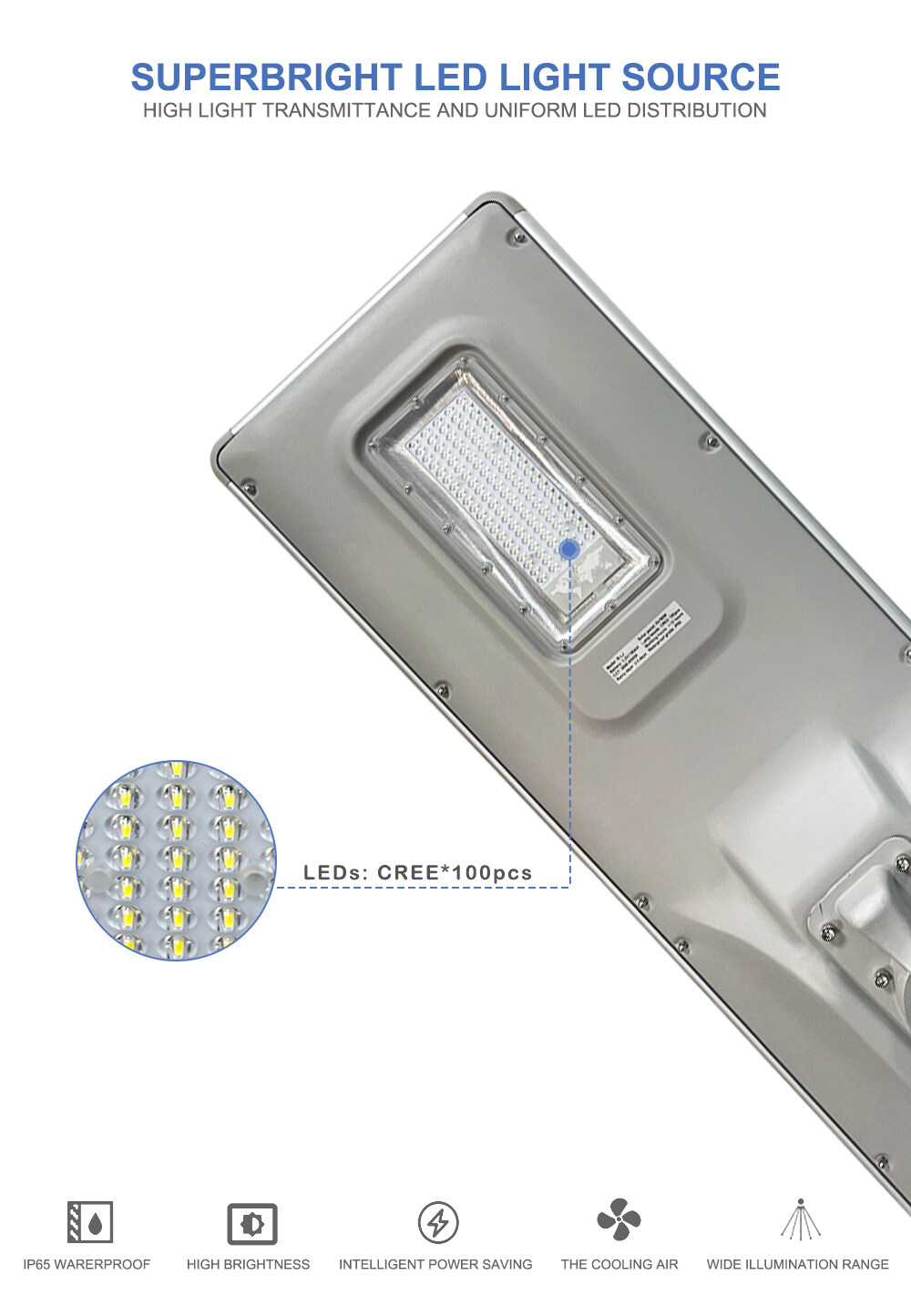
Driven by multiple factors, the integrated solar street lighting market is currently showing several distinct development trends. These trends are not only reflected in the product form, but also in the continuous upgrading of application scenarios and functional requirements.
With the continuous advancement of LED technology, the luminous efficiency of modern integrated solar street lamps has significantly improved. Under the same power output, they can provide higher brightness and more uniform lighting effects. At the same time, the progress in battery technology (especially the extension of lithium battery cycle life and improvement of safety) has greatly enhanced the overall operational efficiency of all-in-one solar street lamps, reducing maintenance and replacement frequencies. For large-scale projects, this means that in road or park lighting projects, the long-term operation and maintenance costs can be significantly reduced, resulting in a higher return on investment.
2. Intelligence and Remote Management
The modern all-in-one solar street light with a camera is no longer merely a simple lighting device; instead, it is an intelligent terminal that integrates sensors, remote dimming, fault monitoring, and data collection functions. The engineering team can monitor the lamp status, light intensity, and battery health in real time through the remote platform, promptly arrange maintenance and scheduling, thereby reducing on-site labor costs. Moreover, intelligence enables the lamp to automatically adjust brightness according to actual lighting or traffic flow, achieving energy conservation while enhancing safety.
3. Modularization and Customization
Different projects have significant differences in requirements for lighting intensity, installation height, lamp pole design, and even additional functions (such as surveillance cameras, environmental sensors). The modular design of all-in-one LED solar street lights can meet various application scenarios. The modular integration of all-in-one solar street lights with cameras enables the flexible combination of security and lighting. This flexibility greatly enhances the adaptability of the project and the future expansion space, making the integrated solution highly applicable in various types of roads, parks, and public areas.
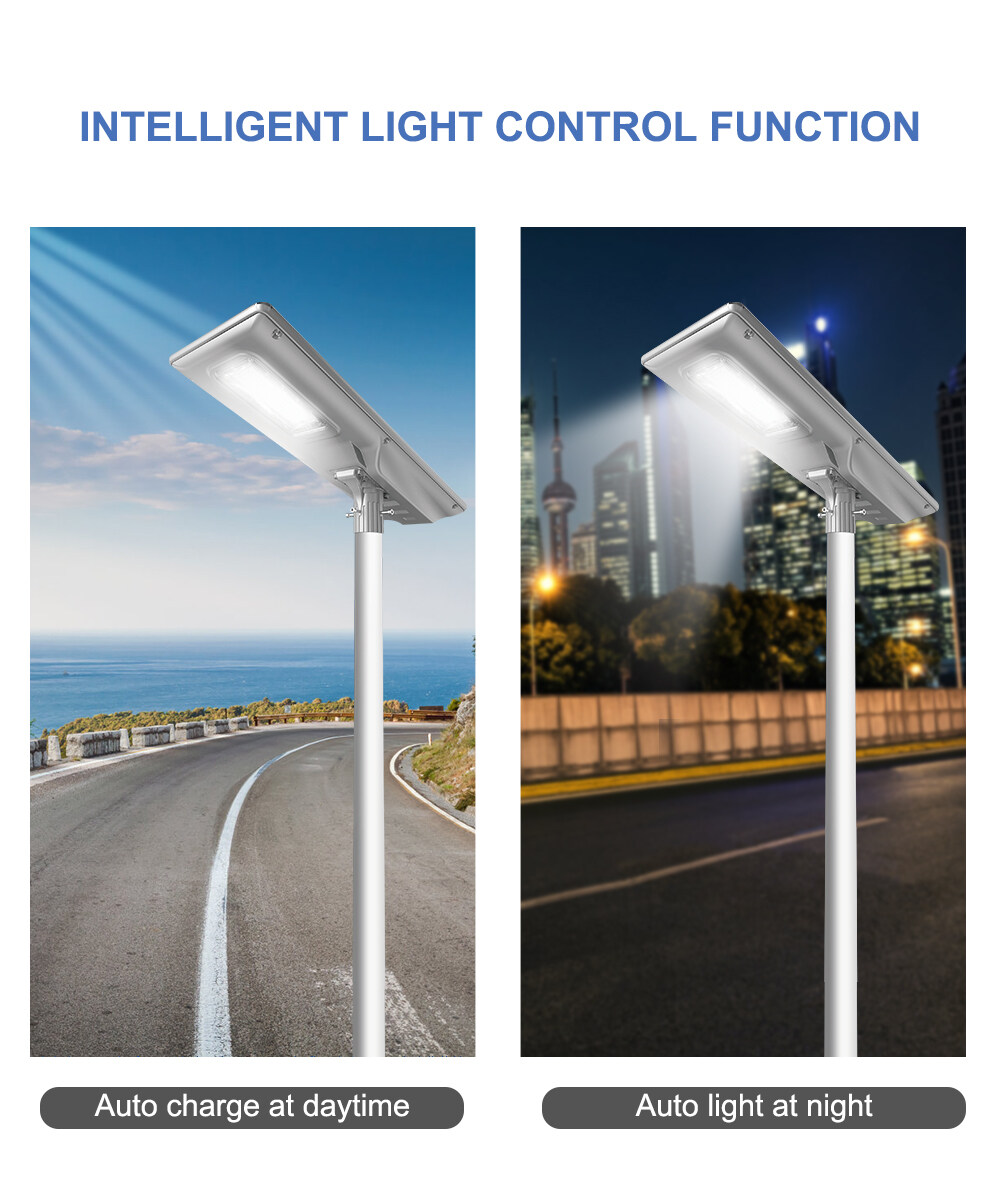
all in one LED solar street light
In long-term engineering projects, the comprehensive strength of the solar street light manufacturer will directly affect the quality of project delivery and the stability of subsequent operation.
Firstly, manufacturing capabilities and quality control systems are the fundamental criteria for evaluating a solar street light manufacturer. The integration of solar street lights encompasses multiple technical aspects such as optical design, structural strength, battery management, and control systems. Any instability in any of these aspects will affect the overall performance of the all-in-one solar street light. Therefore, manufacturers with a mature production system and strict testing procedures can better ensure the long-term reliable operation of the product under different climatic conditions.
Secondly, project experience is also of great significance. Solar street light manufacturers with extensive overseas project experience tend to be more familiar with the installation standards, lighting regulations, and usage environments of different countries. This experience accumulation is not only reflected in product parameters, but also in the understanding of project cycles, transportation plans, and on-site installation compatibility. It is particularly important for the large-scale application of all-in-one LED solar street lights.
Furthermore, with the increasing demand for intelligent lighting, the manufacturers' capabilities in technological iteration and system integration have also become key considerations. Especially in projects involving all-in-one solar street lights with cameras, whether the manufacturers possess system-level solution capabilities will directly affect the scalability and long-term value of the projects.
Looking ahead, the development of integrated solar street lights will no longer be limited to the "lighting equipment" itself, but will gradually evolve into an important part of urban infrastructure.
Overall, the integrated solar street light market in 2026 is in a stage of steady development and structural upgrading. Whether it is the wide application of all-in-one solar street lights in basic lighting, or the continuous improvement in efficiency and lifespan of all-in-one LED solar street lights, all these indicate that this product form has become an important part of the global lighting industry. At the same time, with the continuous maturation of intelligent solutions such as all-in-one solar street lights with cameras, solar street lights are evolving towards higher-value infrastructure nodes.
In such an industry context, choosing a solar street light manufacturer with manufacturing capabilities and a long-term perspective will be one of the key factors for the success of the project. As a brand specializing in solar lighting, Yuefeng has always been committed to providing more sustainable lighting options for global engineering projects through stable and reliable integrated product solutions. As the industry continues to evolve, Yuefeng will also continuously focus on technological innovation and changes in market demand, working with partners to promote the long-term development of integrated solar street lights.
FAQ
Q1: What are the main applications of all in one solar street light with camera?
A1: An all in one solar street light with camera is commonly used in smart city projects, industrial parks, highways, and public security areas. It combines lighting and surveillance functions, helping project owners enhance safety while optimizing infrastructure investment.
Q2: Is all in one solar street light suitable for large-scale infrastructure projects?
A2: Yes. Due to easy installation, low maintenance requirements, and flexible configuration, all in one solar street light solutions are widely adopted in large-scale municipal, road, and industrial infrastructure projects, especially in off-grid or remote areas.
Q3: What is an all in one solar street light?
A3: An all in one solar street light is an integrated lighting system that combines the solar panel, battery, LED light source, and controller into a single unit. This design simplifies installation, reduces wiring work, and lowers long-term maintenance costs, making it suitable for large-scale projects.